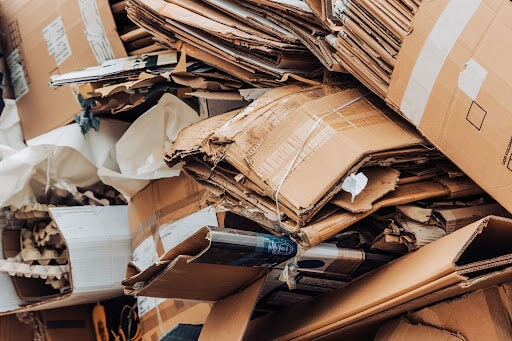
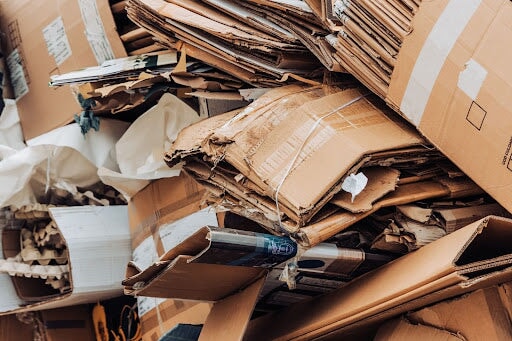
Paper disposal is not as simple as discarding yesterday’s memos or last year’s financial reports. Behind each stack of paper lies a story: contracts signed in trust, letters written in urgency, and records that carry the weight of accountability. In an age where information flows faster than it can be stored, the act of disposing paper has become not just a matter of tidiness but one of ethics, security, and sustainability.
The Burden of Paper in a Digital Age
Despite the advances of digitisation, paper remains a stubbornly persistent presence. Offices still produce volumes of documents each day, much of it redundant within weeks. What becomes of these documents is a quiet but crucial issue.
Left unmanaged, they accumulate in cupboards, storerooms, and bins, becoming easy prey for opportunists. In them are the fragments of identities, financial secrets, or organisational strategies. The danger is not abstract: improperly discarded paper has often been at the centre of fraud, identity theft, and breaches of trust.
Why Paper Disposal Demands Discipline
The significance of paper disposal lies in what it protects, and what it prevents. A structured approach ensures more than cleanliness:
Confidentiality preserved
Sensitive information is permanently erased.
Compliance maintained
Organisations meet the growing demands of privacy and data protection laws.
Environmental stewardship
Paper, once shredded, is recycled into new material, reducing the demand for raw resources.
Public trust upheld
Communities and clients gain confidence when records are responsibly handled.
A Singaporean review on waste management captured it well: “The question is not whether paper will be disposed of, but how it will be disposed of, and whether the process protects both people and the planet.”
Singapore’s Approach to Paper Waste
Singapore, pressed by its limited space and unwavering discipline in paper disposal management, offers a lens on how societies can confront this challenge. Its policies reflect an understanding that paper is not mere rubbish; it is material, information, and potential resource all at once.
The city-state emphasises:
Precision in destruction
Ensuring confidential records are irreversibly destroyed.
Accountability in practice
Documentation and certification to verify secure disposal.
Recycling integration
Channelling shredded paper into recycling systems that feed back into the economy.
Such measures reveal a dual commitment: protecting privacy while reducing strain on the environment.
The Ethical Responsibility of Disposal
Every sheet of paper thrown away carries moral weight. A signed cheque, a medical record, or a student’s file is more than pulp, it is trust, history, and identity crystallised in ink. When paper is disposed of carelessly, that trust fractures.
To shred and recycle responsibly is to acknowledge that the duty of care extends beyond the lifespan of the document’s use. It is to affirm that what has once borne human stories deserves respect, even in destruction. Neglect, conversely, sends a message of disregard, both to the individuals represented in the records and to the environment that absorbs the waste.
Practical Steps Towards Responsible Paper Disposal
Responsible disposal is not merely an aspiration; it is a practice built step by step. Organisations and individuals can take simple, structured actions:
Establish a disposal schedule
Prevent piles of documents from becoming unmanageable risks.
Adopt shredding as standard
Ensure destruction is complete and irreversible.
Segregate sensitive and non-sensitive waste
Treat all confidential material with the utmost caution.
Verify recycling channels
Ensure shredded material is recycled rather than incinerated unnecessarily.
Educate employees
Instil awareness that disposal is part of stewardship, not an afterthought.
Such actions build resilience, transforming disposal from a logistical afterthought into an institutional habit of protection.
The Human Story in Every Document
Consider the old files sitting in boxes at the back of an office: payroll ledgers, staff evaluations, contracts long since expired. To the untrained eye, they are clutter. But to those who know, they are a map of lives, hours worked, promises made, disputes settled.
The question is not whether to dispose of them but how. To send them carelessly to landfill is to leave those lives vulnerable. To destroy and recycle them with discipline is to close the chapter responsibly, ensuring that the paper carries forward meaning in its next life as recycled fibre, not as a tool for exploitation.
The Environmental Imperative
The disposal of paper is not only about privacy, it is about sustainability. Each tonne of recycled paper saves trees, water, and energy. Singapore’s waste management reports stress that “Recycling paper is not optional; it is foundational to reducing the ecological strain of a resource-intensive society.”
By making recycling inseparable from disposal, societies close the loop, ensuring that consumption does not leave behind only destruction but also renewal. Paper, in this sense, is not wasted but transformed.
Conclusion
Paper is a medium of human memory, authority, and trust. Its disposal, therefore, is never trivial. When handled with care, the act protects identities, sustains the environment, and affirms responsibility. When neglected, it courts risk, exploitation, and waste. Singapore’s example demonstrates how discipline and foresight can turn disposal into both protection and renewal.
The challenge before us is to see disposal not as an ending but as a transition, from vulnerability to security, from clutter to resource, from secrecy to sustainability. In this light, the quiet but essential act that demands our attention today is paper disposal.